
| Statistic | Reportedincidents | /100k people | Charleston/100k people | Missouri/100k people | National/100k people |
| Total crime | 105 | n/a (estimate) | 2,361 | 2,403 | 2,119 |
| Murder | 1 | n/a | 22.5 | 7.8 | 5.0 |
| Rape | 1 | n/a | 22.5 | 45.2 | 37.5 |
| Robbery | 0 | n/a | 0.0 | 51.5 | 60.6 |
| Assault | 34 | n/a | 764.6 | 357.5 | 256.1 |
| Violent crime | 36 | n/a (estimate) | 810 | 462 | 359 |
| Burglary | 8 | n/a | 179.9 | 236.3 | 229.2 |
| Theft | 48 | n/a | 1,079.4 | 1,306.5 | 1,272.1 |
| Vehicle theft | 13 | n/a | 292.3 | 398.4 | 258.8 |
| Property crime | 69 | n/a (estimate) | 1,552 | 1,941 | 1,760 |

The Charleston crime rates are 11.4% higher than the national average. There are two main categories of crime - violent crime and property crime. Violent crime consists of murder, rape, robbery and assault, while property crimes include burglary, theft and vehicle theft. There were a total of 36 violent crimes in Charleston (810 per 100,000 people), which is 125.4% higher than the national average and there were a total of 69 property crimes (1552 per 100,000 residents) which is 11.9% lower than average.
In terms of the total Charleston crime rate per 100,000 people, it falls within the midrange when compared to other cities across the United States. Our analysis of total crimes, encompassing both violent and property offenses in Charleston, revealed that the reported crime rates closely align with the nationwide average reported by other areas.
Charleston ranks among the bottom 10% of all U.S. cities reporting violent crime, earning its reputation as one of the nation's most dangerous areas. With a violent crime rate of 810 per 100,000 people, Charleston is considered one of the most unsafe cities in America. This statistic translates to a 1 in 124 chance of becoming a victim of violent crime in Charleston, underscoring the need for increased safety measures and community engagement to improve the city's security.
Although the murder rates in America have decreased steadily since 1990, over the last few years there has been an uptick. Charleston has one of the highest murder rates in the country when compared to all other cities that reported crime in the U.S. There were a total of 1 murders in Charleston, which is 22 murders per 100,000 people.
The property crime rate per 100,000 people in Charleston is very similar to the national average. Charleston had a property crime rate of 1552, while the national average was 1760. Based on these numbers, you could expect an average amount of property crime in this area.
Is Charleston a safe place to live? While the answer may not be straightforward due to variations in safety levels across the city, gaining an understanding of the overall crime rate can prove to be advantageous. In general, Charleston has a crime rate that is higher than the national average by 11%. Breaking this down on a daily basis, it translates to 0.29 daily incidents, encompassing 0.1 violent crimes and 0.19 property crimes. Evaluating these statistics can aid in forming a more informed perspective on the safety of Charleston as a potential place to call home.
Year-over-year crime data allows us to analyze short-term trends in crime activity. By comparing crime rates from one year to the next, we can identify patterns and shifts in Charleston crime rates. This information can be invaluable for residents looking to make informed decisions on where to live. When comparing the most recent year to the previous year, total crime in Charleston has decreased by 32.3% year over year. Violent crime has decreased by 35.7% and property crime has decreased by 30.3%.
If employment opportunities are limited or if many jobs offer low wages, it can lead to higher rates of unemployment and underemployment, which could lead to an increase in Charleston crime rates. Areas where individuals struggle with unemployment or low wages, may be more susceptible to an increase in criminal activities as a result of financial insecurity. While lower rates of unemployment or a surplus of job opportunities could lead to a decrease in crime as their basic needs are being met. Charleston has an unemployment rate of 5.7%, compared to a national average of 4.9%.
High cost of living can lead to economic stress for individuals and families, particularly those with limited financial resources. When people struggle to make ends meet due to high housing costs, healthcare expenses, or other basic necessities, they may be more inclined to engage in criminal activities, such as theft or fraud, as a means of financial survival. On the flipside, cities that have a lower cost of living, could see a reduced crime rate. In Charleston, the cost of living is 19.07% lower than the national average.
The impact of law enforcement and community policing efforts plays a crucial role in shaping crime rates in any city. A robust and cooperative bond between law enforcement and the community can serve as a deterrent to criminal activities, enhancing overall safety. In Charleston, the ratio of police officers and civilians per 1,000 residents stands at 3.2, differing from the national average of 3.25. Effective law enforcement hinges not solely on officer numbers but also on the manner in which they interact and collaborate with the community. Building trust and cooperation are central tenets of community policing, amplifying its influence on crime prevention.

| Item | Charleston | Missouri | National |
| Law enforcement employees (officers & civilians) | 19 | 12,115 | 558,732 |
| Police officers & civilians /1000 residents | 3.2 | 3.7 | 3.3 |
| State | Total offenders | Missouri /100K | National /100K |
| Missouri | 19,657 | 344 | 266 |
| City | Population | Violent crime/100k people | Property crime/100k people | Total crime/100k people |
| East Prairie, MO | 3,072 | 176 | 702 | 878 |
| Mounds, IL | 947 | 166 | 828 | 993 |
| Cairo, IL | 1,928 | 162 | 963 | 1,125 |
| Benton, MO | 904 | 285 | 1,199 | 1,485 |
| Columbus, KY | 245 | 294 | 1,866 | 2,160 |
| Wickliffe, KY | 784 | 310 | 1,966 | 2,276 |
| Blodgett, MO | 148 | 485 | 2,038 | 2,523 |
| Charleston, MO | 5,691 | 810 | 1,552 | 2,361 |
| City | Population | Violent crime/100k people | Property crime/100k people | Total crime/100k people |
| Waterford, WI | 5,691 | 167 | 693 | 861 |
| Tracyton, WA | 5,692 | 258 | 1,954 | 2,212 |
| Weldon Spring, MO | 5,688 | 150 | 631 | 781 |
| Orchard Homes, MT | 5,688 | 188 | 718 | 906 |
| Salida, CO | 5,688 | 184 | 603 | 788 |
| Charleston, MO | 5,691 | 810 | 1,552 | 2,361 |

 Here are the best places to live in Missouri
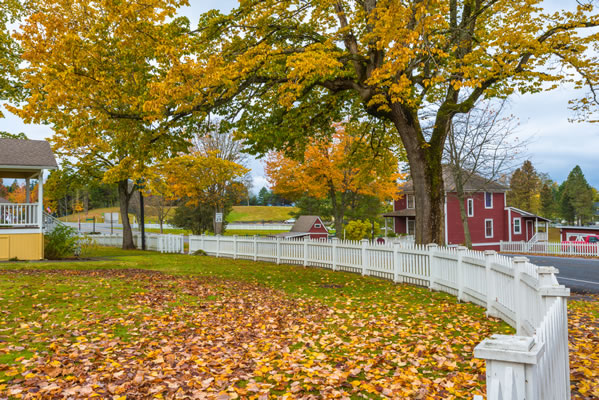 See the best places to live in Charleston
 These are the 10 cheapest cities in Missouri
 Safest Cities In The US